Host venue
A permanent activity on your estate
You are not putting on one event. You are adding a line to what you already sell, and it has to hold up when the same trail runs three times in a week with no rewriting.
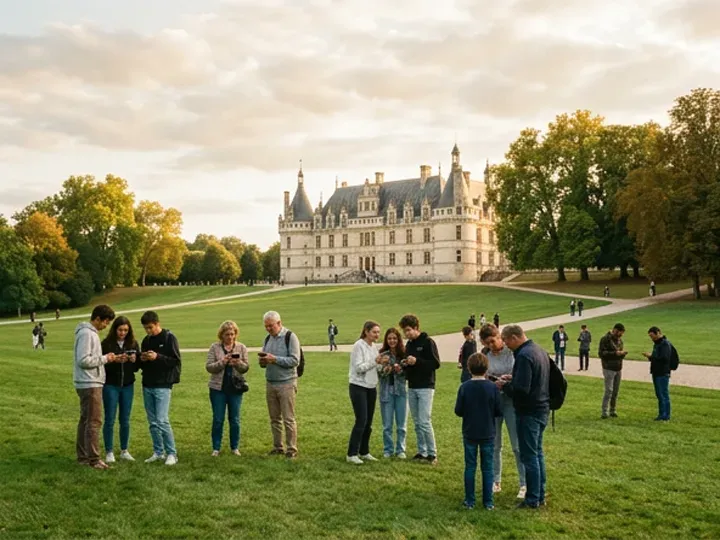
How it runs, start to finish
- You build the trail once on your own ground, fix the labels where rain and mowing will not reach them, and run it with staff until the timing is right.
- Each group gets its own launch: the objects stay where they are, the scores start from zero. Reception hands over a link and there is nothing to install.
- The group finishes at a point you chose, sees its own statistics, and the next booking can start on the same trail the same afternoon.
- Ground
- Estate, château · 20 to 2,500 ha
- Format
- All season · successive groups
- What goes in
- Your brand, several trails
What this format changes
- One build, a whole season. The work is in hiding and timing the trail once. After that, taking another booking costs you a launch, not another afternoon on the ground.
- The screens carry your name, your colours and your own map background, so the activity reads as part of the estate rather than something bought in.
What to plan for
Labels live outdoors. Laminate them, prefer posts and walls to tree bark, and walk the trail at the start of each season: a hiding place that worked in April can be behind a bramble in July. Keep a spare sheet printed.
The first hunt costs nothing
The free plan builds a whole hunt, rehearses it as often as you want in test mode, and runs it for real once a month. The core of the game is identical on every plan.
See the other use cases
- Team building
Half a day that mixes the departments
- Offsite
The breath between two meeting rooms
- Camps and activity centres
An outing that works without equipment
- Stag and hen parties, birthdays
A scenario written for one person
- Territory
Showing off a village, a valley, a coastline