Camps and activity centres
An outing that works without equipment
Children in your care, one adult per team, and a budget that does not stretch to hiring anything. Whatever you run has to work with the ground and the people the centre already has.
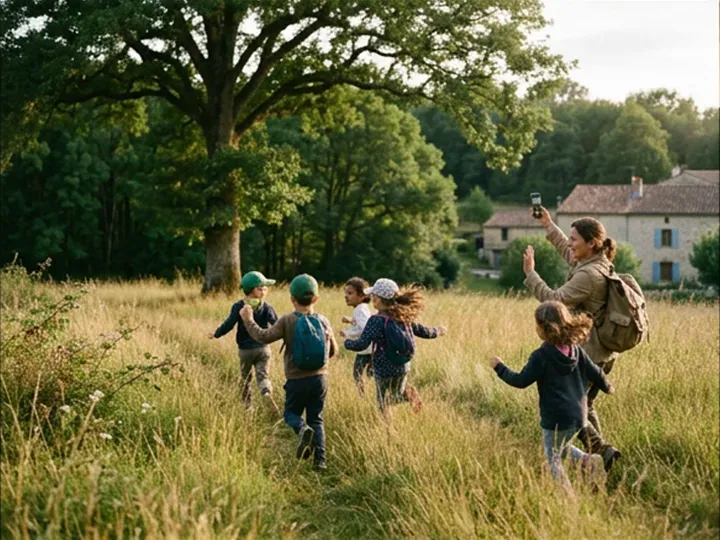
How it runs, start to finish
- You pick a wood or a corner of the activity park, hide objects a child can carry, and write the riddles in the vocabulary of the age group in front of you.
- Each team walks with its leader. The children read the riddle, search, and call the adult over when they have their hands on something to scan.
- The last object opens the treasure, every team converges on the same clearing, and the scores are read out loud rather than left on a screen.
- Ground
- Woods, activity park · 5 to 50 ha
- Format
- 1 device per team · 1 h to 2 h
- What goes in
- Simple objects, children’s theme
What this format changes
- Mixed abilities stop mattering. The child who reads slowly can be the one who spots the object, and the team needs the reading and the spotting to reach the next riddle.
- A test launch can be repeated as often as you like, so you can walk the whole trail yourself the day before and find the riddle that only makes sense to an adult.
What to plan for
One adult per team is the real limit on how many teams you can run. Walk the ground first for the obvious hazards: water, a road, a gap in a fence. Hide objects worth nothing, because some of them will not come back.
The first hunt costs nothing
The free plan builds a whole hunt, rehearses it as often as you want in test mode, and runs it for real once a month. The core of the game is identical on every plan.
See the other use cases
- Team building
Half a day that mixes the departments
- Offsite
The breath between two meeting rooms
- Host venue
A permanent activity on your estate
- Stag and hen parties, birthdays
A scenario written for one person
- Territory
Showing off a village, a valley, a coastline