Team building
Half a day that mixes the departments
You already have the date, the headcount and the site. What is missing is what actually happens between the briefing on the grass and the moment everyone walks back in.
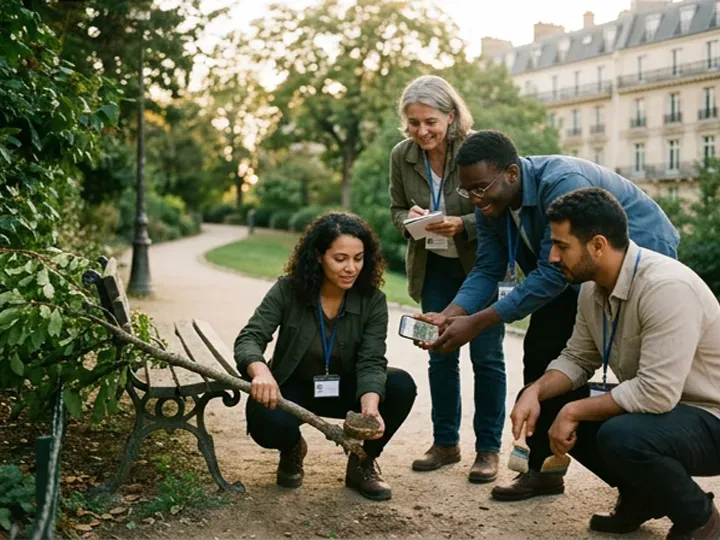
How it runs, start to finish
- You draw the zone on a map, hide the objects yourself on the morning of the event, and stick a printed QR label on each one before anybody arrives.
- Teams open a link on their own phones, with nothing to install and no account to create, then follow the proximity radar while the riddles pull them apart.
- You follow the whole field from the console, release the final treasure when the clock says so, and close the hunt with everyone still on site.
- Ground
- Park, campus, estate · 5 to 80 ha
- Format
- 20 to 64 people · 2 h
- What goes in
- Objects, riddles, final treasure
What this format changes
- There is nothing to hire. The kit is a sheet of QR labels, the objects you chose yourself, and the phones people already carry in their pockets.
- Nobody sits it out. There is no ball to catch and no fitness test to pass: walking, reading and arguing about a riddle is the whole skill of the afternoon.
What to plan for
Ask before you hide anything. A public park usually means a word with the council, a campus means the facilities team. Book an hour on site the day before to check that every hiding place is still there.
The first hunt costs nothing
The free plan builds a whole hunt, rehearses it as often as you want in test mode, and runs it for real once a month. The core of the game is identical on every plan.
See the other use cases
- Offsite
The breath between two meeting rooms
- Host venue
A permanent activity on your estate
- Camps and activity centres
An outing that works without equipment
- Stag and hen parties, birthdays
A scenario written for one person
- Territory
Showing off a village, a valley, a coastline