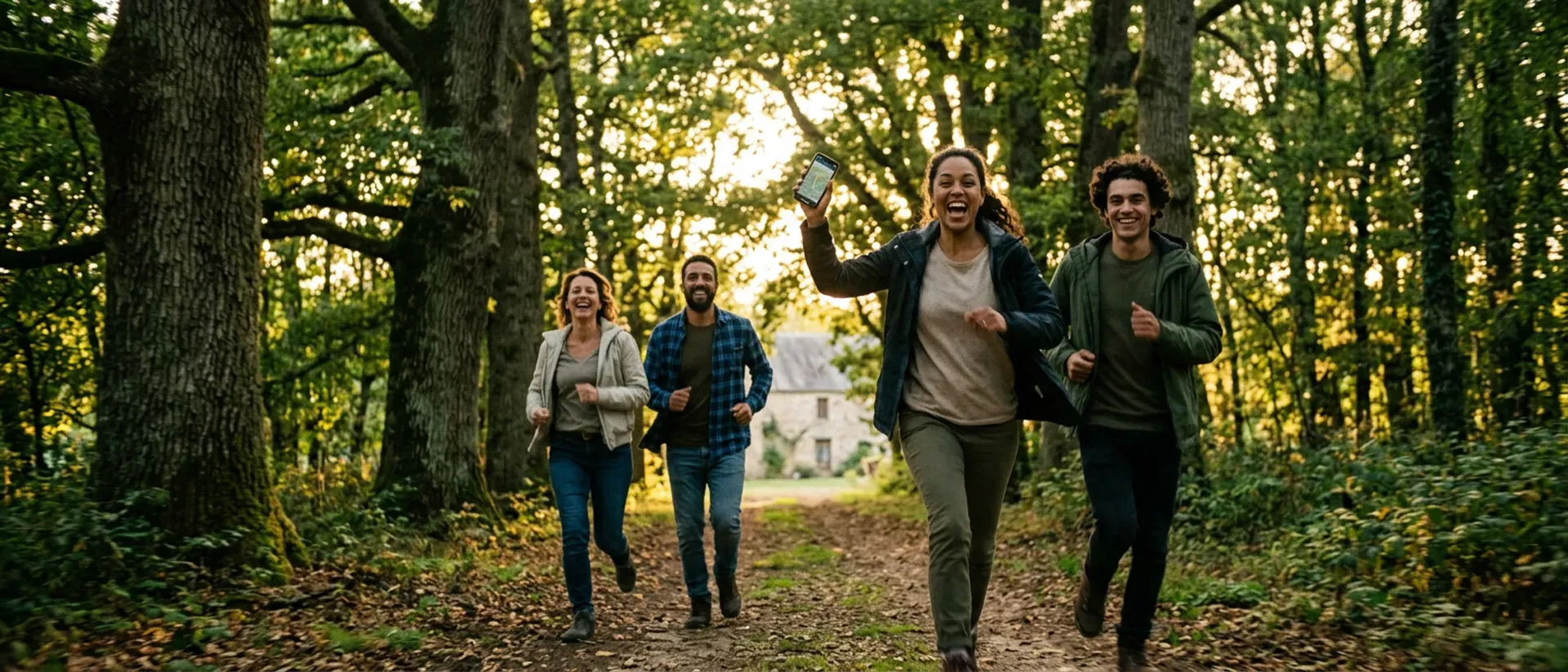
Four players running down a woodland path, one holding up a phone showing the map, a stone house behind them.

No app · no player account

Turn any place into a real-world treasure hunt

A park, a forest, an estate of several square kilometres, a whole village. You hide real objects and write the riddles that lead to them; on the day, you watch the game unfold live from your own screen.

Create a hunt for freeSee how it works

Free plan · no card required · ready in one evening

  • Ground

    From a neighbourhood park to an estate of several km². Satellite map, or your own drawing if the place has no streets.

  • Preparation

    One evening to build the trail and one A4 sheet to print. After that, the hunt replays as often as you like.

  • For players

    A link, or a six-character code. Nothing to install, and no password to recover in a car park.

Four moves are enough to build a hunt

From the empty map to the starting whistle

  1. Draw the ground

    Outline the playing area on the map, whether that is a park, a wood, an estate or a small town. If the place does not show up properly, drop your own georeferenced plan on top.

  2. Place the objects

    A point on the map, a name, a riddle. It will be something to collect, a riddle step, or a treasure you release once the game is running.

  3. Print and hide

    One A4 sheet of labels, each carrying its object’s name. You cut them out, you go and place them, and that part is done.

  4. Launch and run it

    On the day, the scoreboard moves live in front of you. You keep the rest in hand: an announcement to everyone, a hint to one team, a treasure dropped at the right moment.

And before any of that, an unlimited test mode that replays the exact same game on a short clock. That is where you find out a riddle is unsolvable, rather than in front of the group.

The game, seen from the phone

Three screens are enough to understand

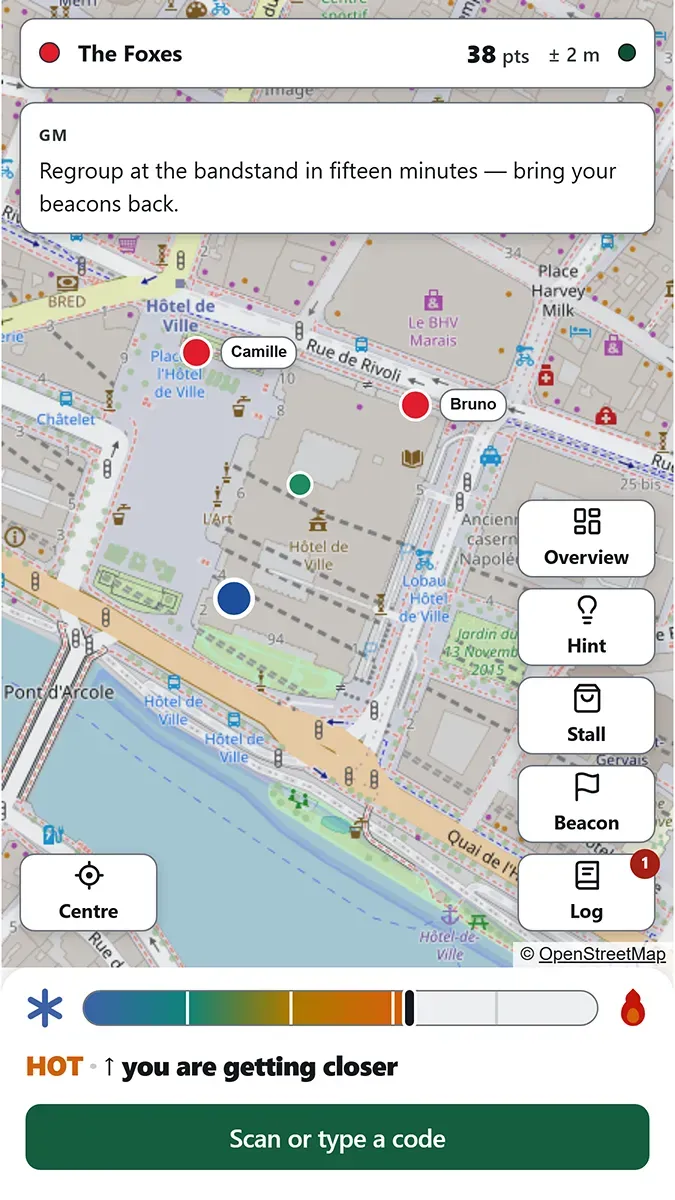
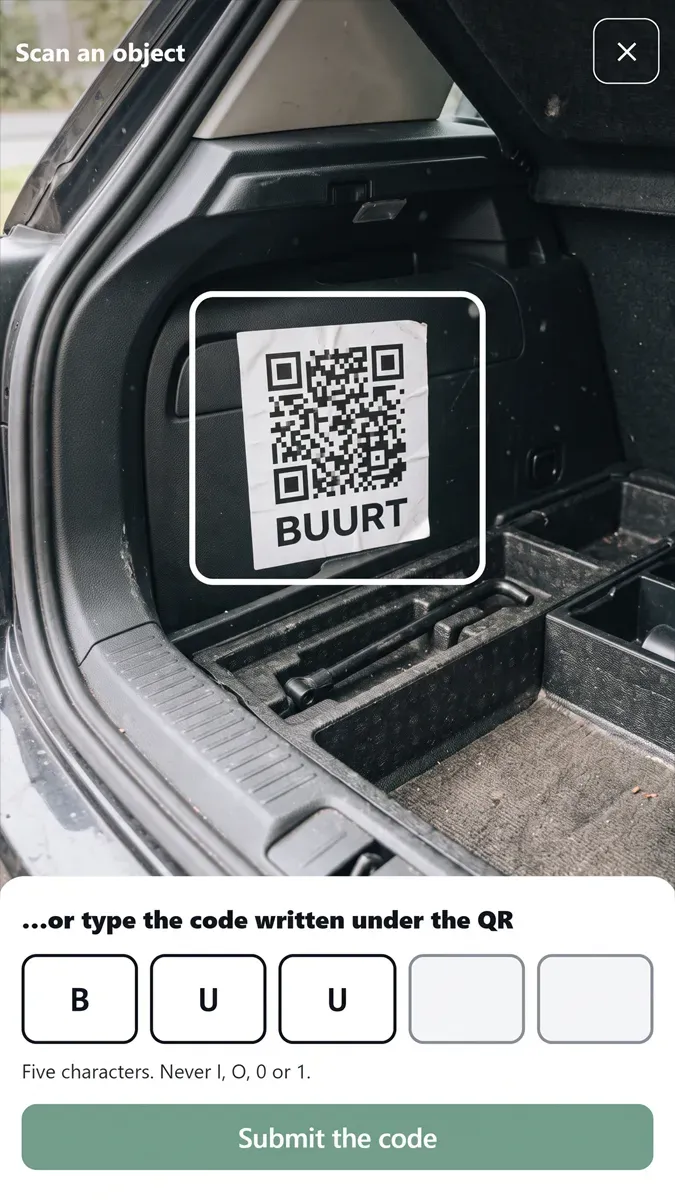
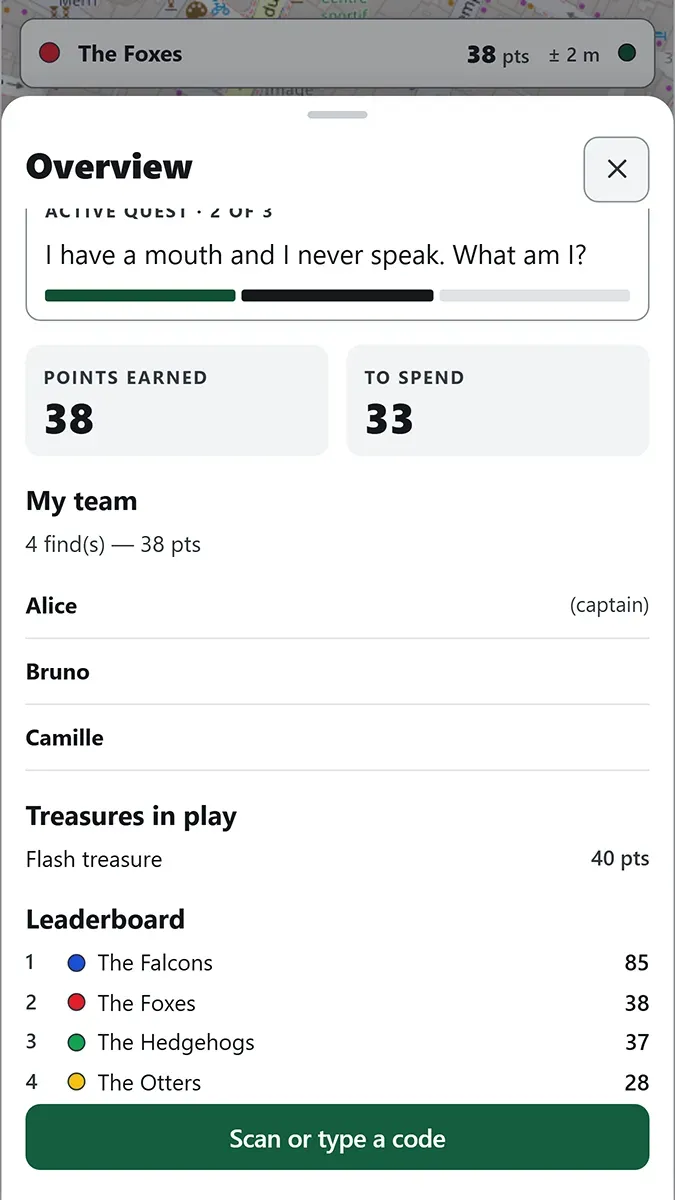
The radar warms up as you close in, but it never gives a direction. The scan confirms what you have really found, and the scoreboard lands live, team by team.

In the browser, nothing to install · visual themes to choose from: children, historical, modern

  • The player map: teammates on the plan, the organiser’s announcement, and at the bottom the proximity gauge showing you are getting closer.

    The proximity radar

  • The camera framing a QR label taped inside a car boot; below it, five boxes for typing the code by hand.

    The scan that scores

  • The summary sheet: the riddle in progress, the points earned, the team members and the live standings of four teams.

    The live scoreboard

Who it is for, and for what

The same tool, four trades that do not use it the same way.

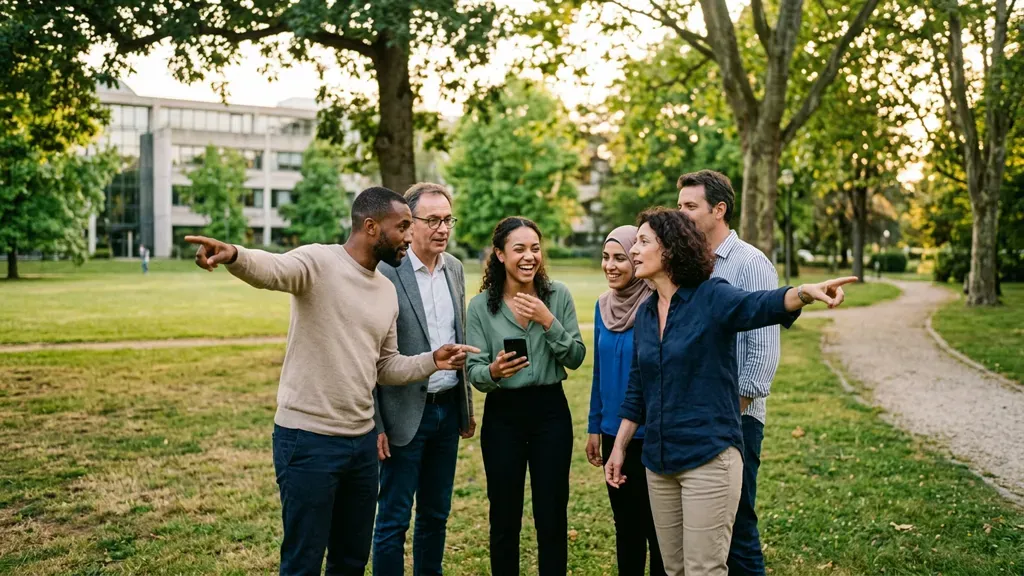
  • Colleagues gathered on the lawn of an office campus, two of them pointing in opposite directions, a phone in hand.

    Companies

    Team building and offsites

    Up to 64 participants in mixed teams, two hours on the offsite grounds or in the park next door. The scoreboard animates itself, and the debrief runs on real statistics: distance covered, riddles solved, who found what.

    Typical ground: 5 to 80 ha · 1 h 30 to 3 h

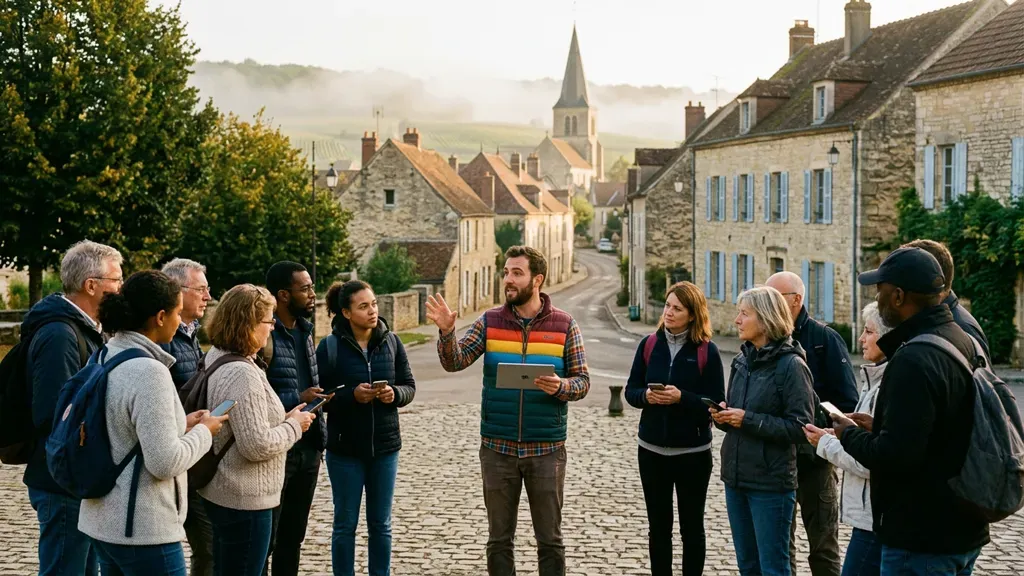
  • A host briefing a dozen participants on a village square at dawn, tablet in hand, everyone holding a phone.

    Agencies

    Event hosts and agencies

    Build a trail once, duplicate it, adapt it to the next client’s venue. Your logo, your colours and the event name replace ours, so the player only ever sees your brand.

    Unlimited hunts · custom branding · report export

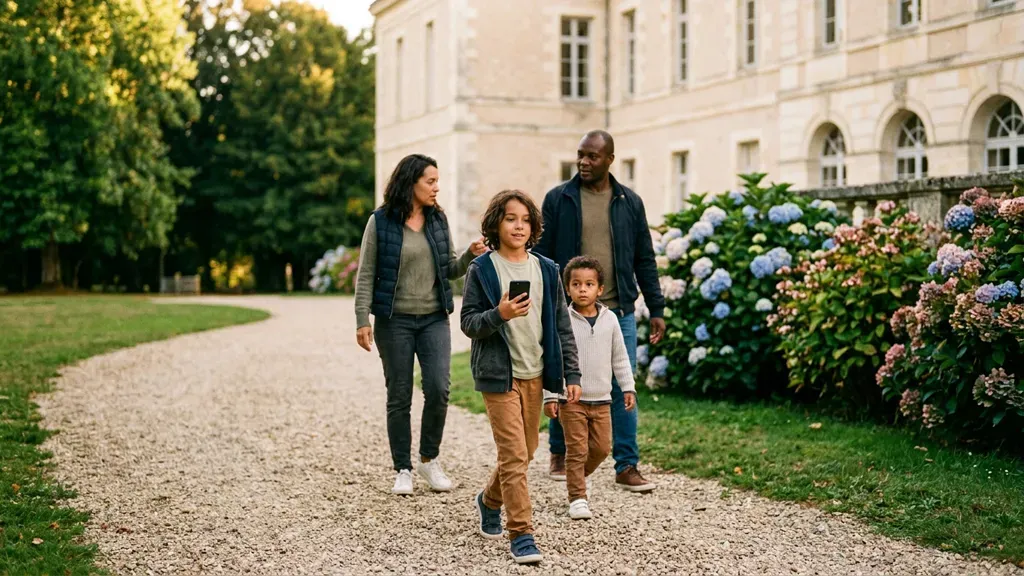
  • A family walking the gravel path of a château, the elder child leading the way with the phone.

    Venues

    Châteaux, estates, campsites, activity parks

    A trail laid once on your property becomes an activity you can offer all season. Every new group starts from scratch, because scores reset and zones close again while the labels stay exactly where they are.

    Typical ground: 20 to 2,500 ha · replayable at will

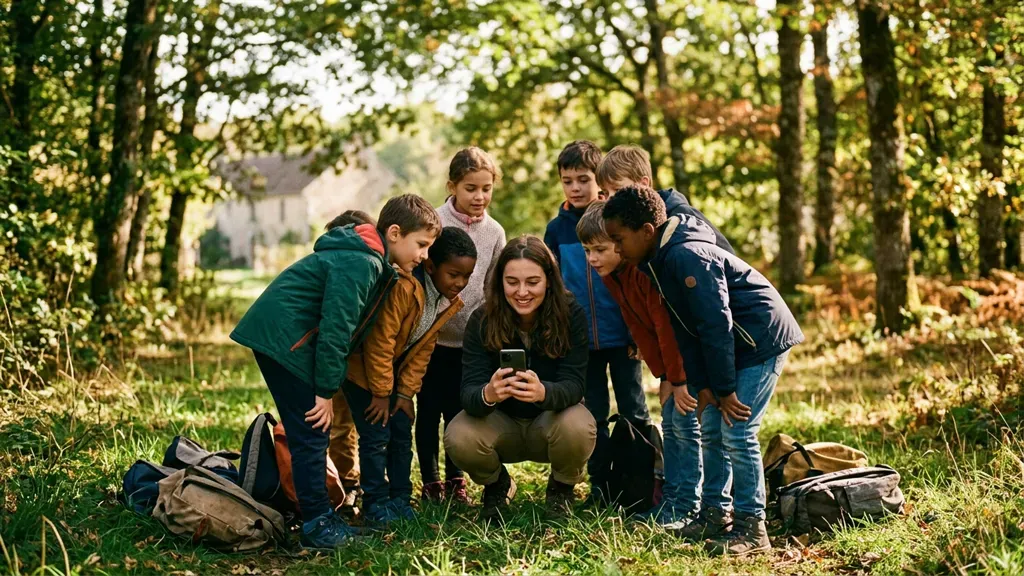
  • Eight children crowding around a leader crouched with her phone in a clearing, rucksacks on the grass.

    Youth

    Schools, summer camps and activity centres

    One phone per team is enough, and it can be the group leader’s. Children have no account and nothing to leave behind: a nickname, a team, and it all disappears when the hunt is archived.

    One device per team · no data kept

Also

Stag and hen parties, birthdays, weddings, village fêtes, festivals, tourist offices. Anywhere there is ground, groups and two hours to spare.

See the detailed use cases

What you can put together

Eight building blocks, assembled however you like. A hunt can use only one of them.

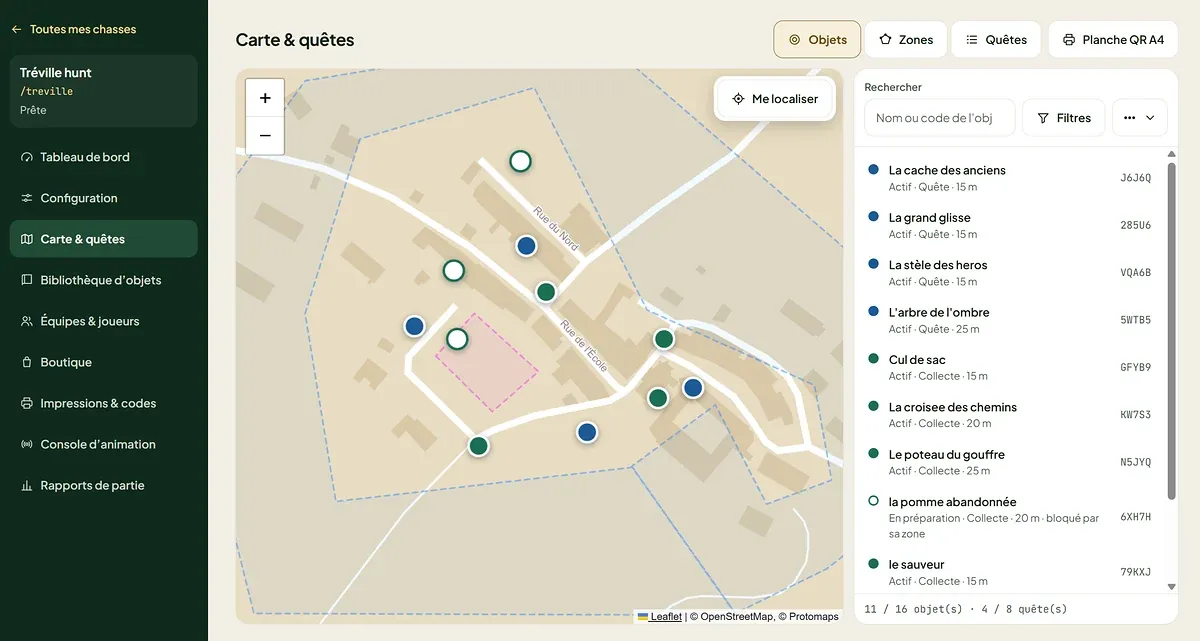
  • The organiser console: the ground on a map, the objects and zones dropped onto it, and on the right the list of objects with their code, their type and their capture radius.
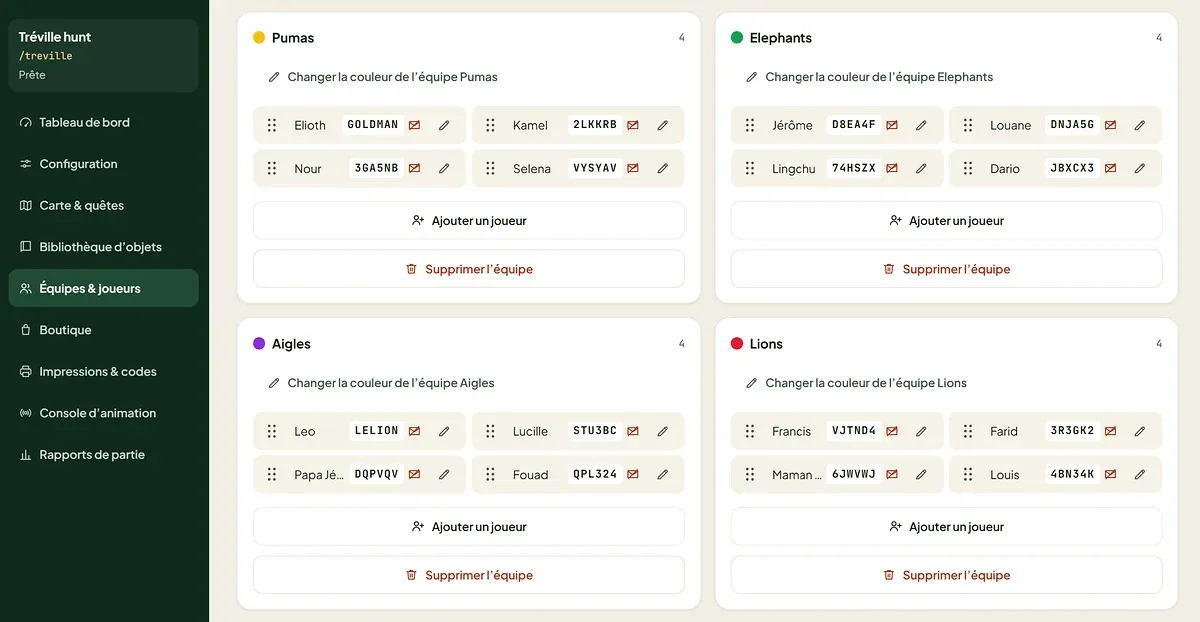
  • The organiser console: four teams of four players, each with its colour and the personal code that gets a player into the game.
  • Objects to collect

    Real hidden objects, each with its label. You find them, you scan them, it scores.

  • Riddle chains

    A trail in steps: each object found hands over the next riddle. Each team takes its own order.

  • Proximity radar

    The phone warms up as the team closes in, through the screen, the sound and the vibration. It gives neither direction nor distance.

  • Timed treasure

    You drop it mid-game: its position shows for everyone, and only the first team gets it.

  • Sealed zones

    Part of the ground stays closed until a team finds the key. The west wing, the island, the attic.

  • Team shop

    Points earned buy advantages mid-game. Strategy invites itself into the race.

  • Live console

    Live scoreboard, team positions, an announcement to all, a hint to one. You keep the tempo.

  • Your brand

    Logo, colours, event name. On the pro plans, the player never sees ours.

Where it gets played

The ground does not need to be equipped. It only needs to be walkable and to offer hiding places.

Urban park
5 to 40 ha
Benches, notable trees, bandstands. The network holds, the map is already accurate, and people walk fast.
Forest and trails
50 to 500 ha
Under the trees, GPS drifts and the network dies. The game is built for that, and the code can always be typed by hand.
Estate and château
20 to 2,500 ha
Outbuildings, orangery, kitchen garden, avenues. Sealed zones open the grounds building by building.
Village and small town
1 to 5 km²
Partner shops, the washhouse, the church, the market square. A hunt that doubles as a visit.
Campsite and activity park
10 to 100 ha
One more activity on the schedule, built once and offered again every week of the season.
Large natural area
25 km² and beyond
Marshland, plateau, coastline, resort. At this scale the game moves by vehicle between zones and on foot inside them.
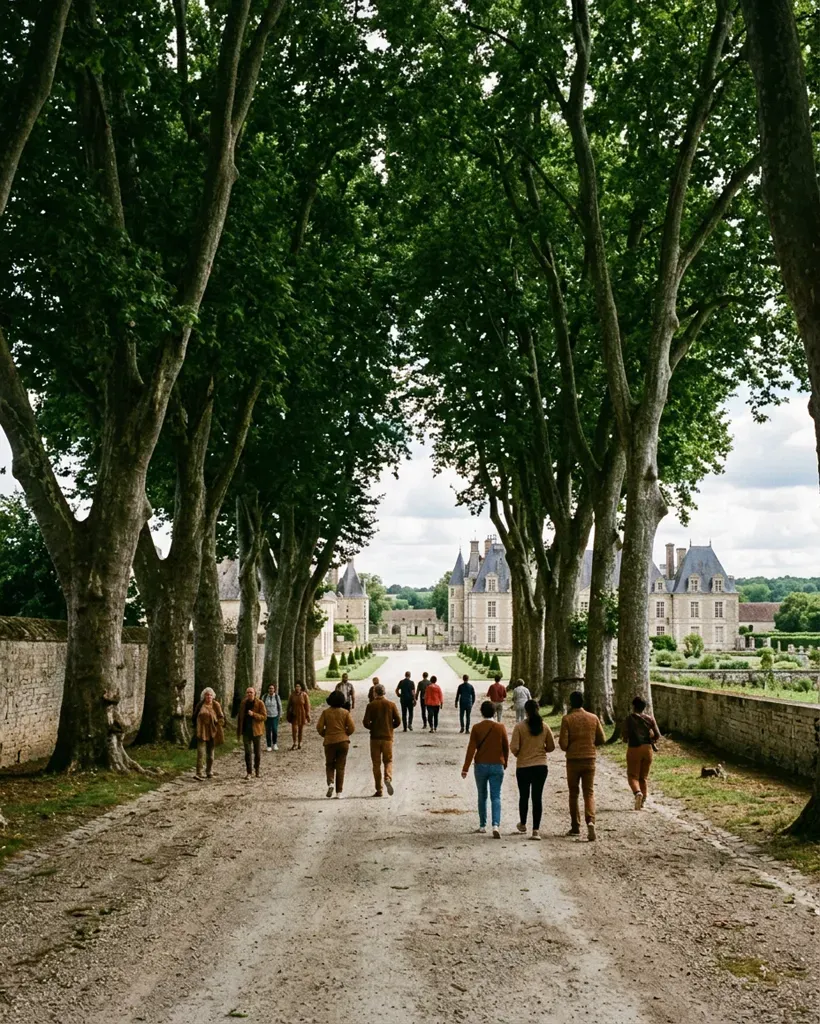
A group walking up a plane-tree avenue towards a château, low stone walls on either side.

You have a place

Your property becomes an activity people book

A château that rents out its rooms, an estate that hosts offsites, a campsite looking for a Wednesday activity: the trail is built once and sold again indefinitely. Labels stay in place between two groups, and every new game resets everything.

  • Nothing to install, no equipment to buy beyond the objects you hide.
  • Your colours and your name on the players’ screens, never ours.
  • One trail per audience: families in the morning, companies after lunch.

Build a trail on your site

They have run it

The first hunts are being played right now. Their organisers’ accounts will land here, written by them, with their name and their ground. Until then, we invent nothing.

The first hunt costs nothing

The free plan builds a whole hunt, rehearses it as often as you want in test mode, and runs it for real once a month. The core of the game is identical on every plan.

Create a hunt for freeCompare the plans